
Make the most of culinary herbs and spices.


Here's one that's full of our favorite recipes because we wrote the book! It is also full of information, helpful hints and ideas for using herbs and spices in your kitchen.


This companion book to the hot-selling Barbecue! Bible adds flavor to the basic grilling methods.

Marinades: A Way to Create Your Own Signature Dishes
by Sandra Bowens
Putting together a marinade provides the opportunity for a creative cook to really shine. Inspiration may come from the food you want to flavor or a specific ingredient that becomes central to the marinade.
Although thousands of marinade recipes exist, there is no right or wrong way to create one. It is a simple matter of mixing ingredients and allowing the desired food to take on those flavors. A marinade is often a liquid but dry rubs or the application of seasonings will marinate as well.
The idea is to add flavor to meat, poultry, fish, vegetables or tofu by allowing the food to sit in, or marinate, for varying lengths of time. Some cooks profess that marinating leads to tenderizing. According to The Complete Meat Cookbook, by Bruce Aidells and Denis Kelly, this only works for thin cuts of meat that aren't particularly tough to begin with such as beef top round and flank steaks or lamb shoulder cuts.
The Basics
Most marinades have three basic components: an acid such as wine, lemon or vinegar, a bit of oil and seasonings like onions, garlic, herbs or spices. There are no hard and fast rules. The acid is what serves to tenderize, the oil gives a marinade body and some flavor and the seasonings, well, they season.
That basic combination above may remind you of salad dressing. Quite true in some recipes. Lovely salads can be created by simply allowing chopped vegetables to steep in their dressing before serving. Bottled vinaigrette-style salad dressings will serve as a fine marinade for just about any food.
Other combinations would be too intense for consuming straight out. Like my favorite marinade for fajitas, a simple combination of Worcestershire sauce, lime juice and black pepper. On this note, you never want to ingest a meat (or poultry or seafood) marinade after using unless you boil it first to destroy any bacteria or other germs. For these same safety reasons, you should never reuse a marinade either. Nor would you want to brush it onto the food in the advanced stages of cooking.
Developing Your Secret Recipe
So how do you create a marinade? Let's say you have a nice flank steak, or London Broil cut in some markets. Why not start with a red wine? Pour about a cup and a half into a two-cup measure or other glass bowl. Let's add a bit of olive oil, maybe 2 Tablespoons. Garlic would enhance the beef and would not overpower the red wine so mince a clove or two and toss that in. Marjoram is the meat herb; a good healthy tablespoon of the dried herb would be good. Oh, and then as we return the marjoram to the spice shelf we notice the ground mustard. Mustard is great with meat and nice with marjoram so a few pinches of that are in order too. Stir all of these seasonings into the wine, add some freshly ground pepper with just a bit of salt and pour it over the meat.
Use a non-reactive dish, meaning no aluminum, for marinating or use a heavy-duty plastic zippered storage bag. It is generally okay to marinade foods at room temperature but only for an hour or two. Any longer and the food should be put into the refrigerator.
Marinating times vary depending on the food and the ingredients. Except for very tender cuts, meat can stay in a marinade for up to two days. The acid that serves to tenderize a tougher cut will cause an already tender piece of meat to become mushy. That same acid will "cook" fish and seafood so marinade times are reduced to between 30 minutes and two hours. This is the basic timing for vegetables to marinade as well. A happy medium of 24 hours is a good maximum for poultry.
Tricks and Tips
To help a marinade penetrate meats, prick the surface deeply with a fork before adding the liquids.
If you are in a hurry, cut foods into smaller pieces.
Sugars in your marinade may burn as you cook the food so watch carefully.
Mince or grate seasonings, such as onion, garlic or ginger, for maximum flavor release.
If it isn't completely immersed, turn the marinating food so that both sides have the opportunity of absorb the flavors.
Besides wines, citrus or plain vinegars, consider fruit juices, soy sauce and herbal or balsamic vinegars. Beer is another classic option.
Flavored oils will also add new dimensions. Look for walnut, hazelnut or oils infused with herbs.
Don't forget the seasoning vegetables like chile peppers, shallots, horseradish and lemon grass.
For inspiration, think in themes or try to accent side dishes. For Mexican flavors, try tequila and lime with cilantro and jalapenos. How about chicken marinated in soy sauce, rice vinegar, ginger and garlic and then served with stir-fried veggies? Marinate some eggplant and summer squash in balsamic vinegar, olive oil and Italian herbs to grill and serve alongside your favorite pasta dish.
Try my favorite marinade for mild fish: Equal parts of lemon, lime and orange juice with dried dill weed and black pepper. Just marinate for 30 minutes or the fish becomes too firm.
A special thanks to "A Chester" for suggesting this article. We really do care about what you think and want to provide the articles you want to read. Send ideas, comments or suggestions to aPinchOf.com now.
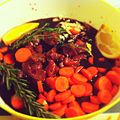
photo courtesy of Wikimedia Commons